

🤝 The Friendship Accelerator: How Being A Nomad Builds Deep Bonds Fast

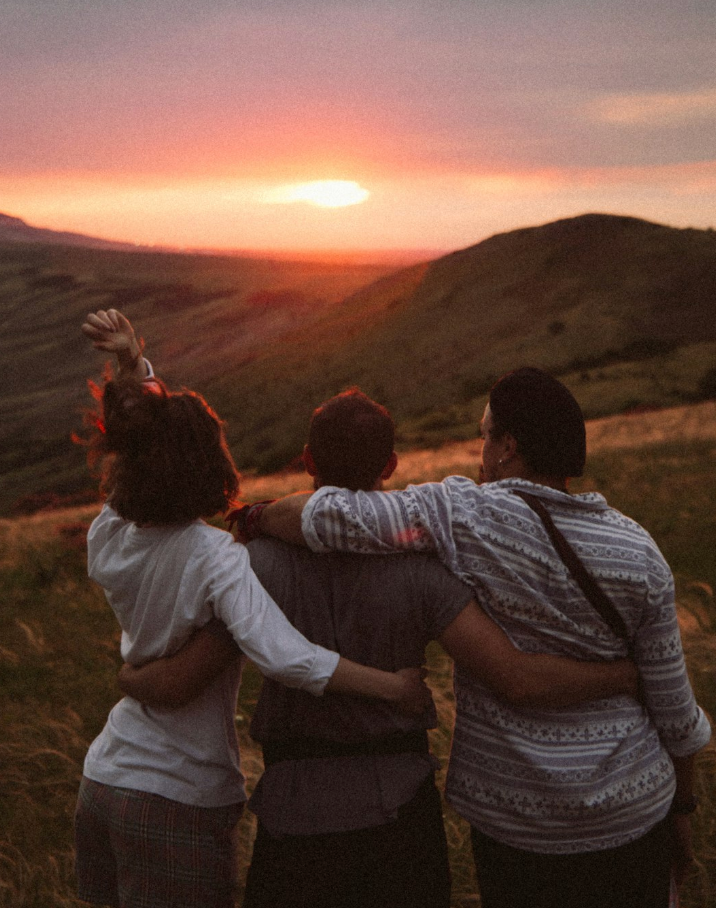
There’s this funny thing that happens on Remote Year — you start the month with forty strangers, and by week two, you’re already sharing everything from Wi-Fi passwords to relationship advice.
When I talked with Maria and Ronak about how they met, the conversation kept coming back to community. How being surrounded by a group of people who are all uprooted at the same time can speed-run intimacy in ways you can’t really explain.
“You become each other’s safety net,” Maria said. “You’re in new countries, new apartments, sometimes even new alphabets. The people you’re with become home.”
And that word — home — hit me. Because Remote Year isn’t just a travel program; it’s a crash course in trust.

Fast Friends, Real Bonds
Ronak described it as “college, but with better food.” Everyone’s juggling deadlines, flights, and foreign grocery stores, yet somehow there’s always someone up for a walk or a last-minute dinner.
“You go through a lot together,” he said. “Lost luggage, bad Wi-Fi, food poisoning. It’s like the universe forces you to bond.”
There’s something almost sacred about that kind of accelerated friendship — the version of you that exists between airports and time zones. You share so much, so fast, that small talk doesn’t stand a chance.
And when I think about the friends I’ve made while traveling — the ones who’ve seen me cry in airport bathrooms or laugh over melted chocolate (it’s always chocolate) — those relationships still feel closer than some I’ve had for years.
Vulnerability Without the Resume
Maria called it “vulnerability by proximity.” You don’t get to hide your bad days or curate your best self. You’re there, living together, working side by side. You see who cooks when everyone’s hungry and who stays calm when the bus breaks down.
“We had people who were CEOs and people figuring out what to do next,” Maria said. “None of that mattered once you’re sharing a kitchen. You just become people again.”
And maybe that’s what makes Remote Year so unique — it strips away the armor. The context of home, career, and comfort disappears, and what’s left is the raw, human stuff: kindness, patience, humor.
I remember when I lived abroad and found myself forming friendships that felt decades deep after only a few weeks. It’s not magic — it’s shared exposure. You’re all learning how to live again, together.
Leaving (and Staying) Connected
Of course, the flip side is that the end always comes too soon. A month or four months later, everyone scatters. Different time zones, new cities, new jobs.
But Maria and Ronak said the secret to keeping those connections alive is intention.
“You can’t stay in touch with everyone,” Ronak admitted. “But you pick a few people, and you make the effort.”
They’ve attended weddings, hosted reunions, kept group chats alive across continents. “Those friendships don’t end,” Maria said. “They just stretch.”
I love that image — friendship as elastic, not fragile. It expands to fit the distance.
The Real Gift
Remote Year sells itself as a travel program, but everyone I’ve ever met who’s done it says the same thing: the biggest souvenir is the people.
It’s this reminder that even as adults — even when we’re tired, guarded, or convinced we have “enough” friends — we can still be surprised by connection.
“It’s a friendship accelerator,” Maria said, laughing. “It makes you believe in people again.”
And maybe that’s what we’re all chasing, whether we’re in Bali or Birmingham — that little pocket of belonging, the group chat that still pings months later, the proof that home isn’t a place. It’s the people who make you dinner when you can’t find the words for the day.
🌍 Listen to the full conversation:
Safe Passages — Maria & Ronak episode
💬 Reflection:
What’s the fastest friendship you’ve ever formed — and what made it stick?